


|
Zircon Flour
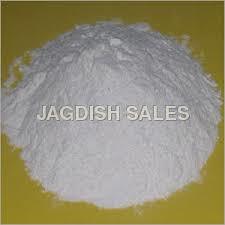

Zircon Flour Specification
- Surface Finish
- Fine, smooth
- Chemical Composition
- ZrO2 + HfO2: 65% Min, SiO2: 33% Max, TiO2: 0.10% Max, Fe2O3: 0.10% Max
- Application
- Ceramics, refractories, foundry, investment casting, glass, abrasives, pigments
- Purity(%)
- 98% Min
- Hardness (%)
- Mohs Hardness: 7-7.5
- Form
- Fine powder
- Density
- 4.7 Gram per cubic centimeter(g/cm3)
- Water Absorption
- Nil
- Usage & Applications
- Used in ceramics glaze, precision casting, foundry coatings, refractory bricks, glass, and pigments
- Melting Point
- about 2350C
- Product Type
- Mineral Powder/Refractory Raw Material
- Types of Refractories
- Acidic Refractory
- Shape
- Powder/Flour
- Porosity
- Very low porosity
- Dimensional Stability
- Excellent at high temperature
- Strength
- High mechanical strength
- Specific Gravity
- 4.4 4.7 g/cm
- Thermal Conductivity
- Low
- Color
- Off White to Cream
- pH Value
- 7.0 - 8.5
- Bulk Density
- Approximately 2.4 - 2.7 g/cm³
- Loss on Ignition (LOI)
- < 0.5%
- Mean Particle Size
- 10-50 microns
- Moisture Content
- < 0.5%
- Refractoriness Under Load (RUL)
- >1700°C
- Packaging
- 25 Kg / 50 Kg HDPE bags
Zircon Flour Trade Information
- Minimum Order Quantity
- 500 Kilograms
- FOB Port
- Mundra
- Payment Terms
- Telegraphic Transfer (T/T), Cash in Advance (CID), Cheque
- Delivery Time
- Days
- Sample Available
- Yes
- Sample Policy
- Free samples available with shipping and taxes paid by the buyer
- Packaging Details
- Standard Packing
- Main Domestic Market
- Gujarat
About Zircon Flour
Ever since our establishment in 2004, we are serving our respected clients by offering them supreme-grade Zircon Flour. It is prepared by precise milling of zircon sand either in the dry state or in a slurry. There are many areas where this flour is utilized such as ceramic frits, foundry mold coatings, shells for investment casting, insulating fibers, glass, and different friction products. The offered Zircon Flour is packed in bulk bags or paper sacks. In addition to this, we offer this flour in different mesh sizes at industry-leading price.
Features:
- High melting and boiling points
- Insoluble in water and other solvents
- Chemically inert nature
Superior Performance in High-Temperature Applications
Engineered to withstand extreme thermal conditions, Zircon Flour demonstrates exceptional refractoriness under load (RUL >1700C) and a high melting point around 2350C. Its fine, smooth surface finish and low thermal conductivity make it a preferred choice for technologies demanding stability and insulation at elevated temperatures, such as in kiln linings, precision casting molds, and specialized foundry coatings.
Consistent Quality and Minimum Impurities
With a minimum purity of 98%, low moisture content, and negligible loss on ignition, Zircon Flour ensures minimal contamination in sensitive applications. Elemental impurities like Fe2O3 and TiO2 are both strictly controlled at a maximum of 0.10%. Its low porosity and nil water absorption further contribute to excellent mechanical and chemical properties.
FAQs of Zircon Flour:
Q: How is Zircon Flour typically used in industrial applications?
A: Zircon Flour is widely used in ceramics (as a glaze opacifier), refractory products (bricks and linings), precision investment casting molds, foundry coatings, glass manufacturing, abrasives, and pigments. Its high temperature stability and mechanical strength make it invaluable in processes that require thermal resilience and fine finishes.Q: What advantages does Zircon Flour offer compared to other refractory materials?
A: Zircon Flour boasts high mechanical strength, superior refractoriness (>1700C), minimal water absorption, and excellent dimensional stability at high temperatures. Its low thermal conductivity and very low porosity lead to greater energy efficiency and improved durability in high-stress industrial environments.Q: When should Zircon Flour be selected over alternative materials?
A: Zircon Flour is preferred whenever applications demand high purity, fine particle size, and resilience to extreme temperaturessuch as in precision casting molds, advanced refractories, and ceramic glazes. It is particularly effective where surface finish, thermal insulation, and stability under heat load are critical.Q: What is the recommended process for handling and storing Zircon Flour?
A: Zircon Flour should be handled in well-ventilated areas and stored in its original, tightly sealed 25 or 50 Kg HDPE bags to prevent moisture ingress. Care should be taken to keep the material dry and uncontaminated, away from acids or alkaline substances that could affect its properties.Q: Where is Zircon Flour sourced and supplied in India?
A: In India, Zircon Flour is available through distributors, importers, manufacturers, suppliers, and traders. It is widely distributed to cater to the requirements of the ceramics, foundry, refractory, glass, and pigment sectors.Q: What are the key chemical and physical properties of Zircon Flour?
A: Zircon Flour contains at least 65% ZrO2 + HfO2, up to 33% SiO2, and a maximum of 0.10% each for TiO2 and Fe2O3. With a density of 4.7 g/cm, specific gravity of 4.44.7, and Mohs hardness 77.5, it features a pH between 7.08.5, no water absorption, and virtually zero porosity.- Minimum Order Quantity
- 500 Kilograms
- Delivery Time
- Days
- Main Domestic Market
- Gujarat
 Get Latest Price
Price:
- 50
- 100
- 200
- 250
- 500
- 1000+

More Products in Investment Casting Raw Material Category
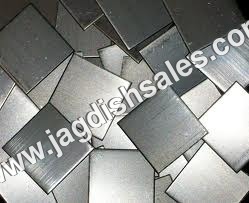
4X4 Nickel Plate
Minimum Order Quantity : 500 Kilograms
Strength : High tensile and yield strength
Surface Finish : Smooth, mirrorlike
Chemical Composition : Nickel (Ni): 99.99%
Thermal Conductivity : 90.9 W/mK
Application : Electroplating, battery components, catalyst production, electronics, aerospace, chemical processing



Contact Details
GST : 24AAEFJ7951P1ZS

 Send Inquiry
 |
JAGDISH SALES
All Rights Reserved.(Terms of Use) Developed and Managed by Infocom Network Private Limited. |
